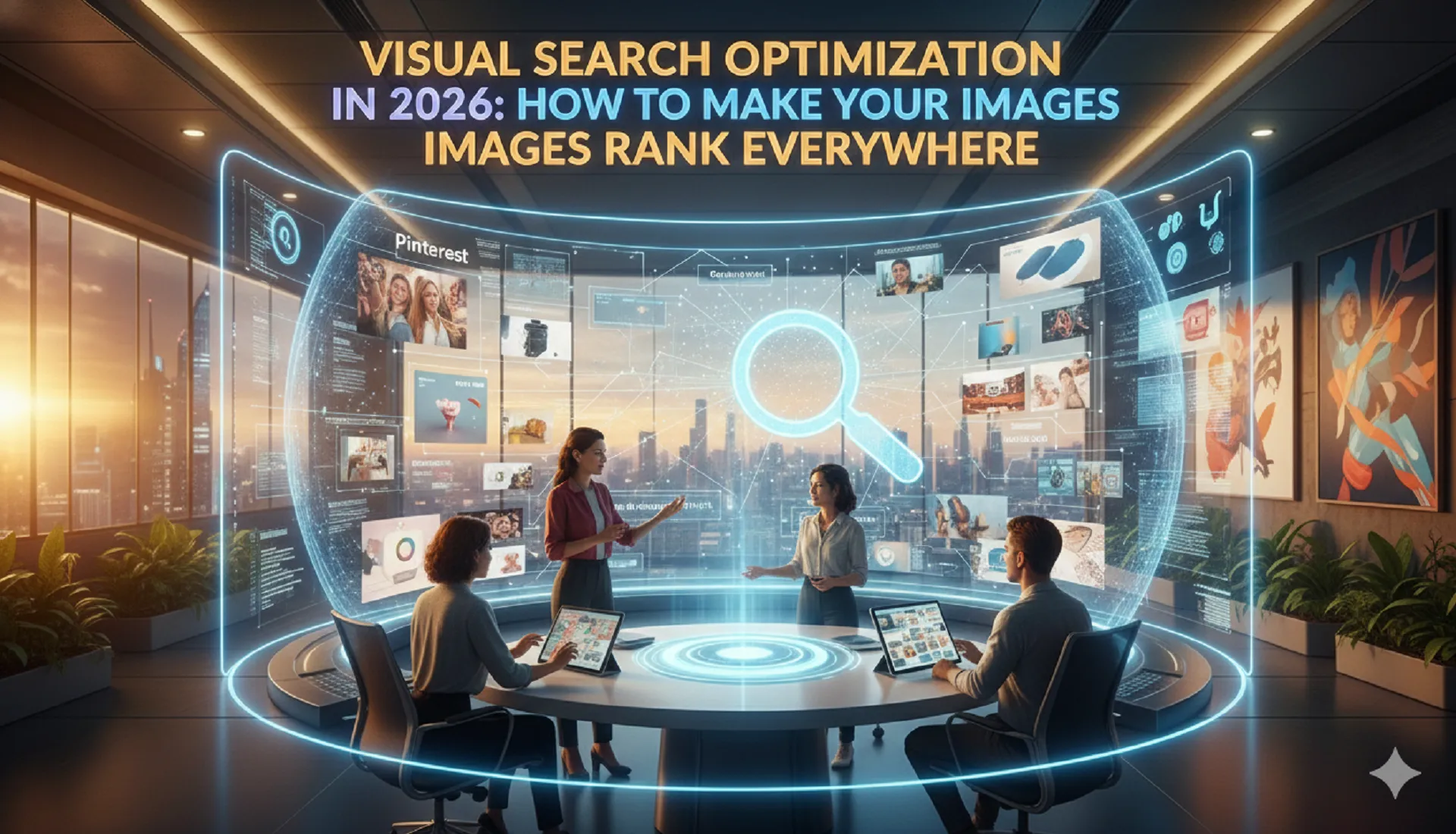
The world of search has changed dramatically, and 2026 marks a new era where images are just as important as text. Search engines now understand visuals like a human does. They analyze colors, shapes, context, patterns, objects, and even emotions. This evolution has made visual search a critical part of modern SEO, especially for brands, eCommerce websites, and anyone working with AI-generated images.
Visual search is no longer limited to Google Images. Today it includes AI chat platforms, multimodal assistants, product discovery tools, and advanced indexing systems that use image recognition instead of keywords. If you want your content to be discoverable, you must understand how visual search works and how to optimize your images in a way that search engines can easily interpret.
In this guide, you will learn what visual search really is, why it matters in 2026, and how you can optimize your images so they rank globally.
What Is Visual Search in 2026?
Visual search refers to the process where users search using images instead of typing words. Instead of typing “red shoes for women”, people now take a picture of a shoe or upload a photo and ask the AI to find similar products. Search engines recognize the product, interpret the context, and return relevant results instantly.
In 2026, visual search has become more advanced because modern systems now combine image recognition, text understanding, and AI models to understand visuals deeply. For example, when you upload an image of a living room, AI can detect the sofa style, lighting type, room theme, colors, and interior design category. This means your images must be structured in a way that AI models can fully interpret them.
Why Visual Search Matters More Than Ever
Visual search matters because users expect fast, accurate results. People no longer want to type long descriptions. They want instant answers through an image.
There are three major reasons why visual search is critical in 2026.
First reason is that AI search systems now prioritize images in search results. Google, Perplexity, and ChatGPT use images to generate more accurate responses. If your images are not optimized, they will not appear in these results.
Second reason is that eCommerce relies heavily on visuals. A product with optimized images can appear in thousands of discovery engines without depending on text keywords.
Third reason is that social media, blogs, and online ads are all visual-first now. The more optimized your visual content, the more engagement, impressions, and search visibility you get.
How Search Engines Understand Images in 2026
Search engines use multiple layers of analysis. This includes object detection, color matching, background identification, image style, and even emotional cues such as calmness, luxury, or creativity. Modern AI takes a multi-step approach.
-
The image is scanned for objects such as faces, clothing, products, backgrounds, shapes, and environment.
-
The system identifies the visual category like food, decor, landscape, technology, or fashion.
-
The model interprets the style such as modern, vintage, minimal, bold, professional, soft, or cinematic.
-
The system evaluates context using accompanying text, file names, and where the image is placed.
-
The image is compared against similar visuals in the index to understand its relevance.
This shows how important it is to optimize every detail of your image. Even small changes such as file naming or alt text can dramatically increase ranking potential.
How to Optimize Your Images for Visual Search in 2026
Visual search optimization requires a strategic approach. The following guidelines will help your images perform better across AI search engines, blogs, and eCommerce platforms.
Use these principles in your workflow:
-
Use meaningful file names. Instead of using default image names like img001.png or photo1.jpg, rename your images with descriptive words such as modern-living-room-interior-2026.jpg or ai-generated-stylish-product-image.jpg. This helps search engines interpret the purpose and category of the image.
-
Write descriptive alt text. Alt text should not be stuffed with keywords. It must clearly describe what the image is showing. For example, “A modern grey sofa placed in a minimalist living room with natural lighting”. This helps search engines understand your visuals more accurately.
-
Add captions when possible. Captions improve engagement and help contextualize the image for readers and search engines, especially in blogs.
-
Use image titles effectively. The image title attribute can contain additional context such as the purpose of the image, the environment, or the product style.
-
Include images that match user intent. If someone is searching for AI tools, your image should relate directly to AI technology, not random generic illustrations.
-
Improve image quality. AI search systems favor high-resolution, sharp images. Avoid heavily compressed or pixelated visuals.
-
Use consistent visual style. A consistent brand style helps AI recognize your brand identity. This increases visibility and authority in search results.
-
Add EXIF and metadata when relevant. Metadata can include camera details, location, subject type, or other context that AI models can use.
-
Use structured data. Image schema helps AI understand relationships between your image and your content. It increases your chances of being indexed as a high-value visual asset.
-
Ensure your images load fast. Fast-loading visuals improve user experience and SEO ranking. Large file sizes can reduce visibility in search results.
Using AI-Generated Images for SEO Advantage
AI-generated images play a major role in 2026. They allow brands to create visual content faster and more affordably. But you must optimize these images to make them search-friendly.
If you use AI images, ensure the content matches your text. Search engines check consistency between text and visuals. For example, if your blog is about visual search, include images that clearly show technology, tools, or AI-driven visual elements.
Also ensure that your AI images feel natural and not overly artificial. Aim for realistic lighting, clean composition, and relevant subject matter. Search engines avoid images that look spammy or irrelevant.
The Role of Context in Visual Search
The placement of an image on your page influences ranking. Search engines look at the paragraph before and after the image to understand context. This means your surrounding text should relate directly to the image.
For example, if your image is about AI-powered visual search tools, make sure the paragraph discusses tools, AI indexing, or image analysis. This creates a strong semantic connection.
Search engines reward content where images support the text message clearly. Inconsistent pairing reduces ranking.
How Visual Search Impacts Global SEO
Visual search expands your visibility to multiple platforms at once. Google Images, Pinterest Lens, TikTok Visual Discovery, Instagram Search, and AI chat models all rely on visual indexing. This means a single optimized image can reach global audiences if optimized correctly.
Visual search also creates new ranking opportunities because your images can appear in search even when your text content does not. This is extremely powerful for new websites.
Final Thoughts
Visual search in 2026 is a major opportunity for brands, bloggers, designers, marketers, and eCommerce websites. AI-powered systems analyze images with incredible accuracy, and this makes image optimization a priority for anyone who wants high global visibility.
If you take the time to optimize your images with strong file names, descriptive alt text, structured data, high quality visuals, and consistent brand style, your content will perform significantly better. Visual search is the future, and optimizing your images today ensures your brand stays ahead in this rapidly evolving landscape.