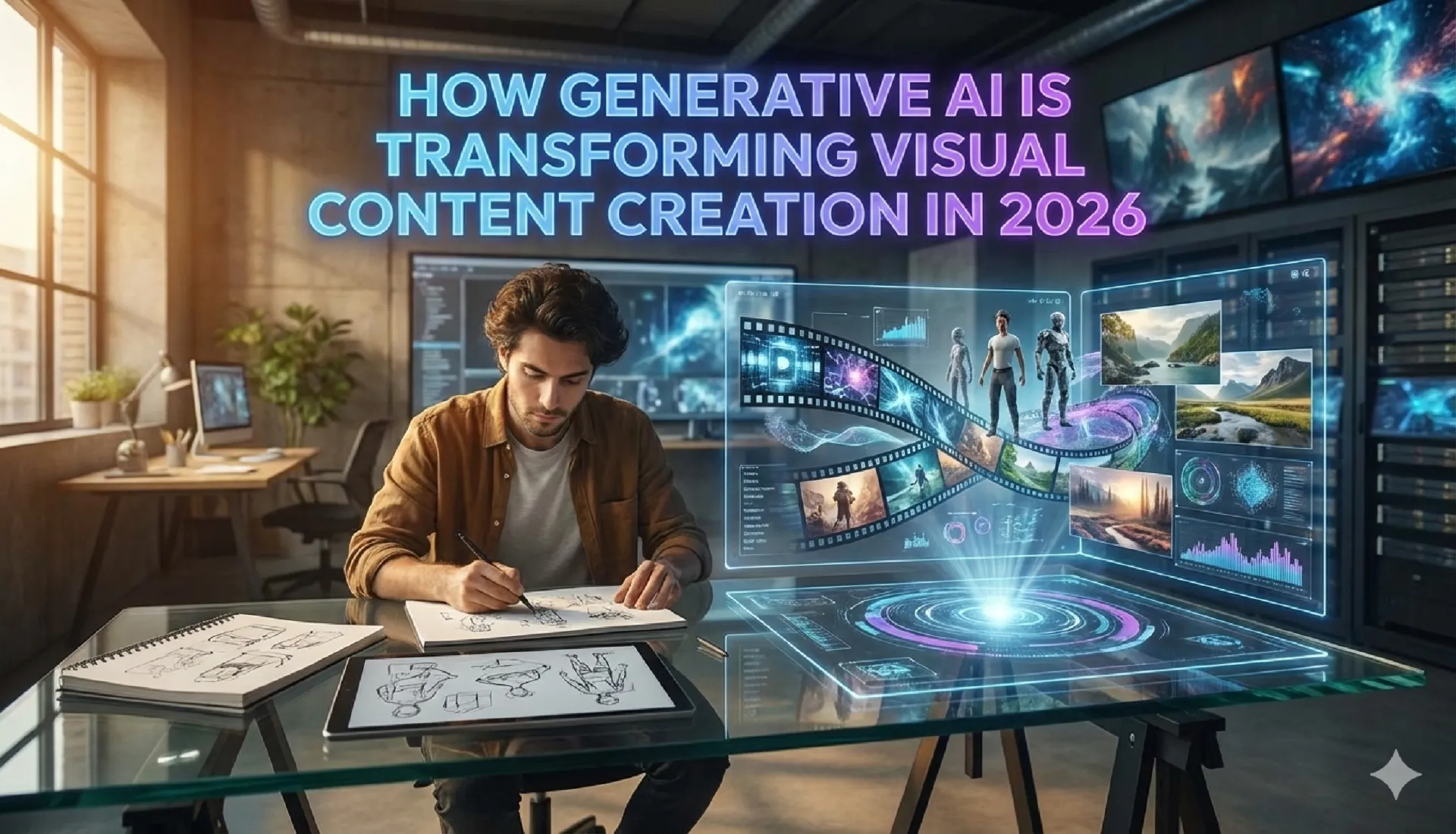
Generative AI has become one of the most disruptive technologies in modern digital creation. In 2026, the way designers, marketers, developers, and content creators produce visual content has changed more in two years than in the previous twenty. The rise of multimodal AI, advanced image models, prompt-based design, and automated creative workflows has pushed visual content into a new era an era where creativity is both human-driven and AI-enhanced.
In this blog, we’ll explore how generative AI is reshaping the visual world, why it matters, and how businesses and creators can adopt these technologies to stay ahead globally.
What Exactly Is Generative AI for Visual Content?
Generative AI refers to machine-learning models capable of producing new images, graphics, illustrations, and designs based on text, sketches, references, or even incomplete visual inputs.
Today’s models do far more than generate pictures they understand lighting, perspective, emotions, styles, branding rules, and creative patterns. They can build full visual concepts that traditionally required complex tools and professional designers.
Some modern capabilities include:
-
Text-to-image generation
-
Style transformation and image enhancement
-
Digital art and illustration creation
-
Logo and brand asset creation
-
Product visualization
-
Photo editing and background generation
-
UI mockups and layout suggestions
Generative AI doesn’t replace designers it accelerates their workflow and removes repetitive tasks, freeing them for deeper creative thinking.
Why Generative AI Matters in 2026
The global trend toward visual content is stronger than ever. Brands, influencers, marketers, and businesses rely heavily on images and design assets for:
-
Social media marketing
-
Paid ads
-
eCommerce listings
-
Product showcases
-
Branding and identity
-
Blog illustrations
-
Landing pages
-
Video thumbnails
But traditional design takes time, costs money, and requires technical expertise. Generative AI solves these challenges instantly, producing studio-quality visuals within seconds.
Key Benefits of Generative AI for Visual Content
1. Faster Creative Workflows
What used to take hours now takes minutes. AI can build mood boards, concepts, drafts, and design variants instantly, dramatically reducing production cycles.
2. Cost-Effective Visual Production
Businesses save on stock images, photo shoots, and external design projects. AI-generated images cost less while offering creative flexibility.
3. Infinite Creative Options
AI produces endless variations of color, lighting, styles, and elements. You can experiment without the cost of iterations.
4. Accessibility for Non-Designers
Small businesses and solo creators can now produce high-quality visuals without relying on Photoshop, Illustrator, or expensive agencies.
5. Increased Global Reach
AI-generated visuals can be customized for cultural relevance, language, region, and audience preferences something that human teams struggle to scale.
Real-World Applications in 2026
1. Marketing & Advertising
Marketers use AI to create ad banners, product images, and landing page graphics optimized for clicks and conversions.
2. Branding & Identity
Logo variations, brand kits, and style guides can be generated quickly, accelerating brand development timelines.
3. eCommerce Visualization
Online stores use AI for product images, lifestyle mockups, color variants, and background changes.
4. Social Media Content
Influencers and creators use AI to keep their content fresh, consistent, and visually appealing.
5. Web & App Design
AI can generate UI layouts, feature screens, and UX variations that help product teams iterate faster.
How to Use Generative AI Effectively (Best Practices)
1. Use Clear and Intent-Based Prompts
Your prompt is the instruction manual for the AI. The clearer you are, the better the results.
2. Add Stylistic Details
Specify lighting, mood, texture, angle, or artistic style for better creative control.
3. Use Reference Images
Hybrid prompt + image input produces highly accurate results, especially for branding.
4. Keep Outputs Consistent
Save prompt structures and use AI model presets to ensure brand uniformity.
5. Always Add Human Review
AI accelerates creation, but humans ensure emotion, authenticity, and accuracy.
The Future of Generative Visual AI
By 2027, visual AI will become even more integrated into:
-
Real-time video generation
-
Image-to-3D modeling
-
Virtual try-on systems
-
Automated branding engines
-
Interactive product visualization
Generative AI isn’t a trend it’s the new foundation of visual creativity.
Final Thoughts
Generative AI has reshaped how visuals are created, distributed, and consumed. Whether you’re a business owner, marketer, designer, or content creator, embracing AI-driven visual workflows will give you a major advantage in 2026 and beyond.
If you want your brand to grow globally, adopting generative AI tools is no longer optional it’s essential.